
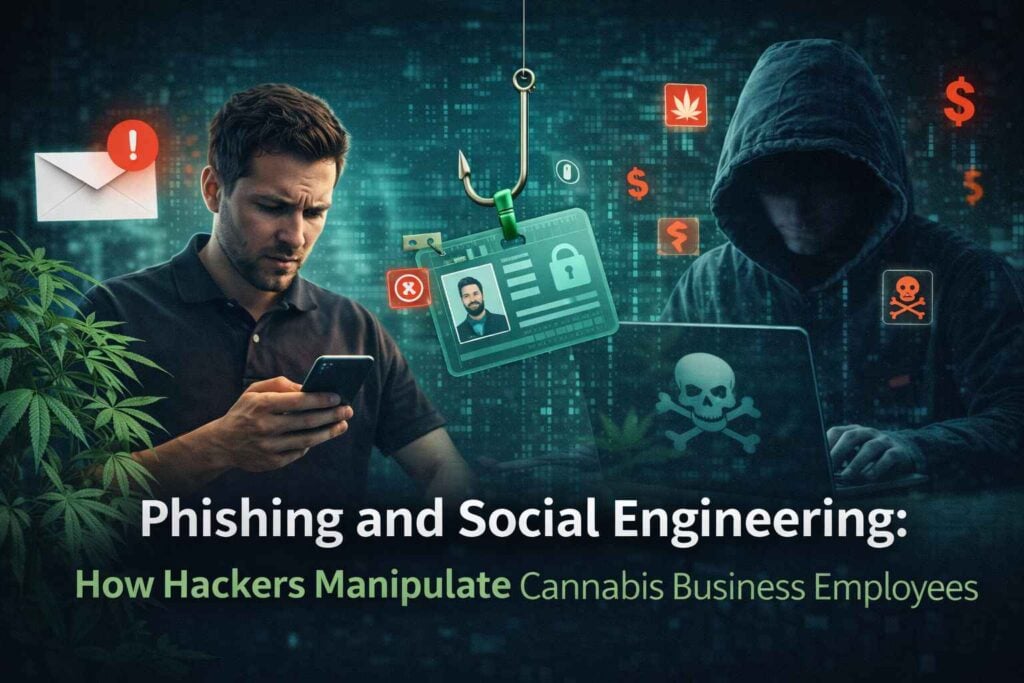
It’s 9 AM on a Tuesday morning. Your operations manager opens what looks like an urgent email from your seed-to-sale tracking vendor. “CRITICAL: Security Alert – Verify Your Account Immediately or Risk Compliance Violation.”
The email looks perfect. The logo is correct. The sender address seems right. There’s a big blue button: “Secure My Account Now.”
She clicks. She enters her credentials. She goes back to work.
Forget Nigerian princes. Modern phishing is sophisticated and terrifyingly convincing.
Professional cybercriminals research before attacking—your social media, vendor lists, LinkedIn connections, employee names. Then they craft emails that look exactly like they came from your POS vendor, seed-to-sale provider, accountant, regulatory agency, or even your CEO.
The email addresses look right at first glance. But look closer: [email protected] uses the number “1” instead of the letter “i.” One character difference in an address you see daily.
The logos are pixel-perfect. The language matches your vendor’s style. Links go to sites that look identical to legitimate portals.
There’s always urgency—a security threat, unpaid invoice, missed compliance deadline, wire transfer needed before end of business.
Your employee has thirty seconds to decide while juggling customers and inventory. The email looks legitimate. They click.
Game over.
Why Cannabis Businesses Are Prime Targets
Wake-up call: 59% of cannabis companies have taken zero steps to prevent cyberattacks.
You face unique pressures attackers exploit ruthlessly:
Heavy regulatory burden. Emails threatening license violations get immediate attention. “Your license is at risk” triggers panic and hasty action.
Cash-heavy operations with limited banking. Wire transfer scams are epidemic because you handle large amounts with fewer safeguards.
Higher staff turnover. New employees don’t recognize what’s suspicious yet—perfect targets.
Complex vendor ecosystems. Specialized seed-to-sale, POS, payment processors, compliance consultants. More vendors = more confusion = easier phishing.
Attack Methods You Need to Know
Spear phishing targets specific people with personalized messages: “Hey Sarah, can you review this supplier contract before the 2 PM meeting with Tom?”
The attacker knows Sarah handles contracts and Tom is the owner. The “contract” is malware.
Smishing (SMS phishing): “Your business banking account has been locked. Call 505-555-0199 immediately.”
Panicked employees call. The fake “bank representative” harvests credentials.
Business email compromise (BEC) targets executives: “I’m in a meeting with investors and need you to wire $85,000 immediately. Don’t mention this to anyone yet.”
By the time you verify, the money’s gone.
Real-World Disasters
STIIIZY dispensaries: Vendor breach exposed 422,075 customer records including government IDs, photos, signatures, and purchase histories. The Everest ransomware group had access for over a month. Four locations affected, countless identity theft risks.
MJ Freeway catastrophe: Over 1,000 dispensaries crippled by ransomware on their state-required seed-to-sale software. Businesses couldn’t process sales or track inventory. Some lost weeks of compliance data. Hackers later posted the company’s source code publicly.
RED FLAGS TO TEACH YOUR TEAM
✗ Urgency and pressure – “Account closes in 24 hours!”
✗ Requests for passwords via email – Real vendors never ask
✗ Suspicious sender addresses – [email protected] (uppercase i, not L)
✗ Generic greetings – “Dear valued customer” instead of your name
✗ Unexpected attachments or links – If you didn’t expect it, don’t click
✗ Bypassing normal procedures – CEO suddenly wants wire transfers via email?
✗ Pressure for secrecy – “Don’t mention this to anyone”
Golden rule: Hover over links before clicking. Does the destination match the text?
Build Your Human Firewall
Make training engaging. Use real cannabis phishing examples. Make it interactive—practice spotting red flags.
Run quarterly simulated phishing tests. Track clicks, but train instead of punish.
Create zero-blame reporting. “This email seems weird” should be praised. Employees who report mistakes immediately give you time to contain damage.
Establish verification procedures. Email says wire $5,000? Call using a known number. Text says account locked? Type the URL yourself. Make verification mandatory.
Practice “pause and think.” Ten seconds before clicking can save your business.
Essential Technical Defenses
Multi-factor authentication (MFA) everywhere. Even if credentials are phished, attackers can’t get in. Required for email, banking, seed-to-sale, POS, all sensitive systems.
Email filtering catches attacks before they reach inboxes.
Email authentication (SPF, DKIM, DMARC) prevents spoofed emails.
Endpoint detection watches for malware behavior.
When Someone Gets Phished
THE BOTTOM LINE
Humans are both your weakest link and strongest defense.
Don’t become another statistic. Build security awareness into your culture now—before you’re explaining a breach to customers and regulators.
Cannabis businesses face enough challenges. Don’t let preventable phishing attacks threaten your license, reputation, or survival.
Not sure where your security gaps are? Start with a comprehensive cybersecurity assessment. We’ll evaluate your current defenses, identify vulnerabilities, and create a practical roadmap to protect your business from phishing, ransomware, and data breaches.
Ready to build comprehensive security awareness training or implement technical controls to stop phishing? Caldera Cybersecurity will help you protect your cannabis business. We understand your unique challenges and pressures.
Contact us: 505-975-4470 or [email protected]
Let’s build defenses that protect your people—and your business.