You’ve invested in cybersecurity.
You have a firewall.
You trained your team.
You feel protected.
But what about your vendors?
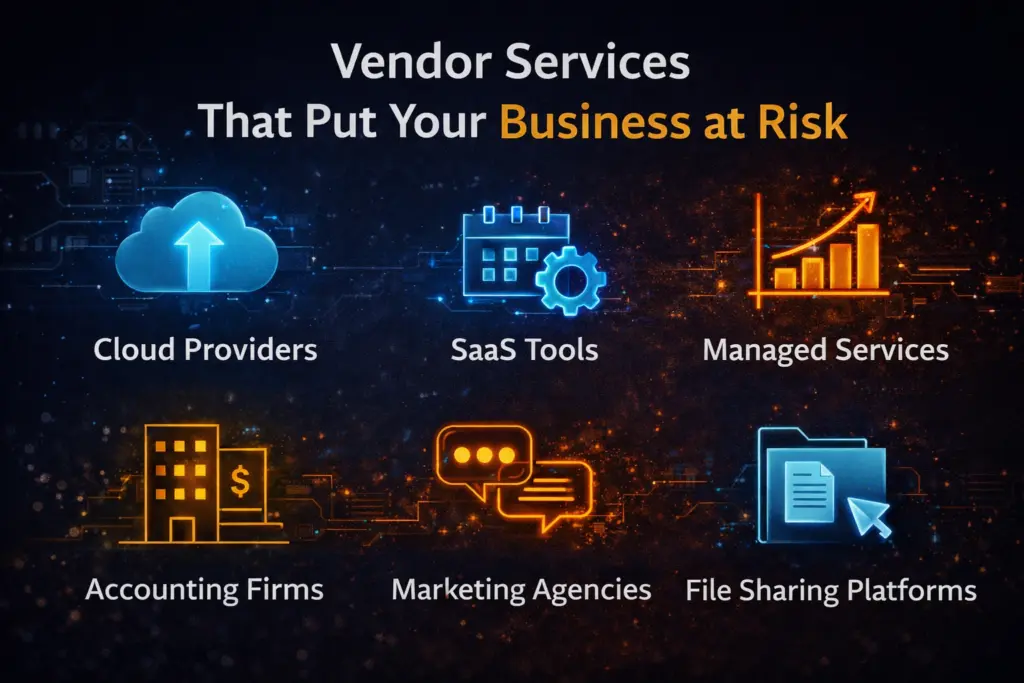
Your accountant, cloud provider, and SaaS tools all connect to your business. Each one is a potential entry point for attackers.
If their security is weak, your business is exposed.
This is known as supply chain cyber risk—and it’s one of the fastest-growing threats today.
Why Hackers Target Vendors Instead of You
Cybercriminals look for the easiest way in.
Large companies often have strong defenses. Smaller vendors may not.
Instead of attacking you directly, hackers go after:
• third-party service providers
• software vendors
• cloud platforms
• managed services
Once inside, they use that trusted connection to reach your systems.
We’ve seen this before. Major attacks like SolarWinds proved that one compromised vendor can impact thousands of businesses.
Your security is only as strong as your weakest partner.
What Happens When a Vendor Gets Breached
When a vendor is compromised, your data is often the target.
Attackers can access:
• customer information
• financial data
• internal systems
• intellectual property
Even worse, attacks may appear to come from a trusted source.
This makes them harder to detect.
The impact goes beyond data loss.
You may face:
• compliance violations
• regulatory fines
• reputational damage
• loss of customer trust
In many cases, the biggest cost is operational disruption.
Your team may spend days or weeks:
• investigating the breach
• resetting access controls
• communicating with customers
• restoring systems
That time pulls your business away from growth and daily operations.
Why Vendor Risk Is Often Overlooked
Most businesses vet vendors for price and performance.
Few assess their cybersecurity.
That creates a blind spot.
It’s easy to assume a vendor is secure. However, without verification, that assumption is risky.
Key questions often go unasked:
• How do they protect your data?
• Do they encrypt sensitive information?
• How do they manage employee access?
• What happens if they get breached?
If you don’t know the answers, your risk is higher than you think.
How to Perform a Vendor Security Assessment
A vendor assessment shifts the conversation from trust to proof.
This process should start before signing a contract and continue throughout the relationship.
Here are key areas to evaluate:
Security Certifications
Look for standards like:
• SOC 2
• ISO 27001
These show the vendor follows established security practices.
Data Protection Practices
Ask how your data is:
• stored
• encrypted
• transmitted
Incident Response Plan
Find out:
• how they detect threats
• how they respond to breaches
• how quickly they notify you
Testing and Monitoring
Strong vendors perform:
• regular penetration testing
• vulnerability assessments
• ongoing monitoring
Access Control
Understand how they manage their own employees’ access to your data.
Build a Strong Vendor Security Strategy
Vendor security is not a one-time task. It requires ongoing attention.
Here’s how to build resilience.
Monitor Vendors Continuously
Security changes over time.
Use monitoring tools or services to track:
• new breaches
• security rating changes
• emerging risks
Use Contracts to Enforce Security
Your agreements should include:
• cybersecurity requirements
• breach notification timelines (24–72 hours)
• right-to-audit clauses
This makes expectations clear and enforceable.
Classify Vendor Risk Levels
Not all vendors carry the same risk.
Group them into levels:
• High risk: access to sensitive data or systems
• Medium risk: limited system access
• Low risk: minimal or no access
Focus your strongest controls on high-risk vendors.
Avoid Single Points of Failure
For critical services, consider:
• backup vendors
• splitting responsibilities
• redundancy planning
This reduces dependence on one provider.
Turn Your Supply Chain Into a Security Advantage
Vendor management is not about distrust.
It’s about shared responsibility.
When you raise your standards, your partners often improve theirs.
This creates a stronger, more secure ecosystem for everyone.
A proactive approach shows clients, partners, and regulators that you take cybersecurity seriously.
In today’s connected world, your network extends far beyond your office.
Your security must do the same.
Protect Your Business from Third-Party Risk
Supply chain attacks are growing. However, they are preventable with the right strategy.
At Caldera Cybersecurity, we help businesses:
• assess vendor risk
• build security requirements
• monitor third-party exposure
• strengthen overall security posture
Don’t let a vendor become your weakest link.
 Contact Caldera Cybersecurity today to build a stronger, more secure vendor ecosystem.